Development / ROBLOX
False settings in Luau: why a default turned the music back on
Use an original music preference exercise to preserve a deliberate false while supplying a default only when a value is missing. Separate missing data, invalid inputs and successful disabled settings before connecting a menu or a saved record.
Give each value a specific meaning #
Imagine a fictional island walking game with a separate background music preference. A player switches the music off, so the teaching data contains false. A new player has not chosen a preference, so the input is nil. The designer wants music enabled by default only for the second situation. This contract separates a deliberate choice from missing information before an expression can accidentally merge them.
This exercise does not claim that the preference already exists in any of our games. It starts with an ordinary Luau function and plain values. There is no Sound object, DataStore request, interface button or network event. Those integrations require their own implementation and Studio checks later. Write down the initial contract: true means enabled, false means disabled and nil means that no value was supplied.
Reproduce the or fallback mistake #
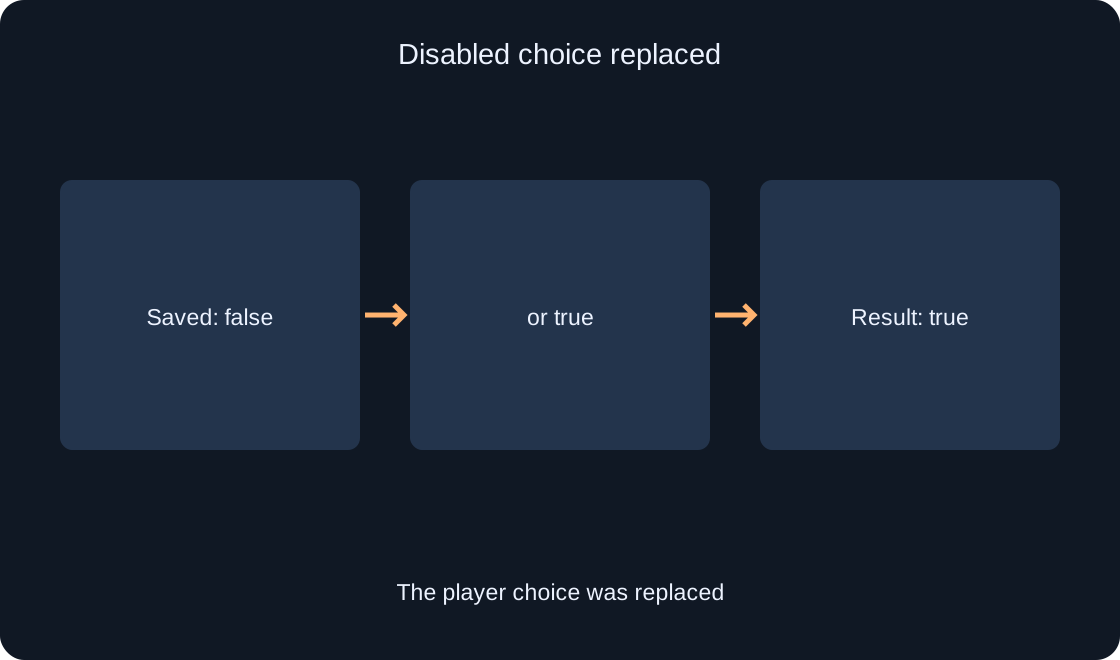
The expression savedMusic or true looks like a convenient default. However, or does not exclusively test whether a value is missing. The official reference explains that it returns the first operand when that operand is truthy and otherwise returns the second. With savedMusic=false, the result is true. A deliberate disabled preference has therefore become an enabled preference during interpretation.
Run a short example with false and print its result. Repeat with true and nil. True survives; false and nil select the fallback. This is language behavior, rather than evidence of a failed data load. Do not rewrite a saved record before checking the expression that reads it. Correct input can be changed into the wrong effective setting after it has already arrived successfully.
 Open full-size image ↗
local savedMusic = false
print(savedMusic or true)
print(0 or 9)
print(true and false or true)Do not treat zero or an empty string as disabled #
In Luau, false and nil are falsey, while zero and an empty string are truthy. Therefore, 0 or 9 returns zero, and an empty string combined with a fallback through or keeps the empty string. An interface with a blank caption will not necessarily acquire your intended replacement text through this expression. Test what the operand actually is before diagnosing the display.
For this preference, zero is not a valid disabled setting. The contract accepts booleans, rather than every value that happens to have some truthiness. The text "false" is also different from the boolean false. Include these values as invalid inputs. Passing an if condition does not prove that a value represents an authorized or well-formed choice made by a player.
Replace only nil with an explicit check #
The booleanPreference function first checks raw==nil. Only that branch returns the agreed defaultValue. If a value is present, another check requires type(raw)=="boolean". Actual true and false then pass through unchanged. A number or string produces a rejection instead of a silent replacement. Missing information is consequently distinct from a disabled preference and from malformed information.
In this exercise, defaultValue must itself be a boolean. An assertion identifies a programming error in the way the helper was called; it is not a complete policy for processing arbitrary input in a live interface. Decide where the allowed default comes from and what the application does after rejection. A default should not unexpectedly be taken from unexamined player text.
local function booleanPreference(raw, defaultValue)
    assert(type(defaultValue) == "boolean")
    if raw == nil then
        return defaultValue, true
    end
    if type(raw) ~= "boolean" then
        return nil, false
    end
    return raw, true
end
local value, valid = booleanPreference(false, true)
print(value, valid)
value, valid = booleanPreference(nil, false)
print(value, valid)
value, valid = booleanPreference("false", true)
print(value, valid)
Separate the value from successful validation #
The helper returns two results: the preference and valid. A successful disabled choice is false,true. Rejection is nil,false. If the caller checks only the first result, a valid disabled preference can enter the same branch as rejection. Check valid first, then use value. This preserves the difference between whether the operation succeeded and which preference it successfully produced.
A future button handler could receive false,true and display the disabled state. Receiving nil,false requires a separate, planned error path, rather than automatically enabling audio. This article does not choose a complete live product policy for you. Keeping the previous confirmed state and reporting the problem may be appropriate for your design. The essential rule is to avoid presenting rejection as a new player choice.
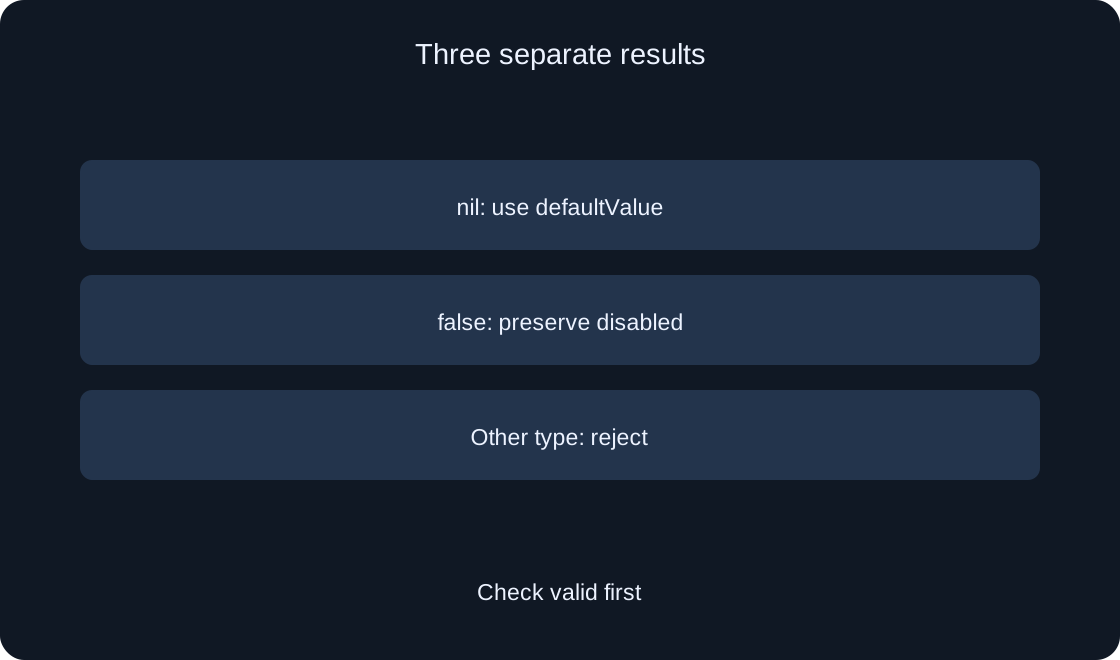 Open full-size image ↗
Inspect the and/or shortcut #
The expression condition and selectedValue or fallback is sometimes used as a compact selection. It does not preserve every allowed selectedValue. With condition=true and selectedValue=false, the intermediate result is false, so or chooses fallback. Our example true and false or true consequently produces true again. Merely having a true condition does not protect a false-valued result.
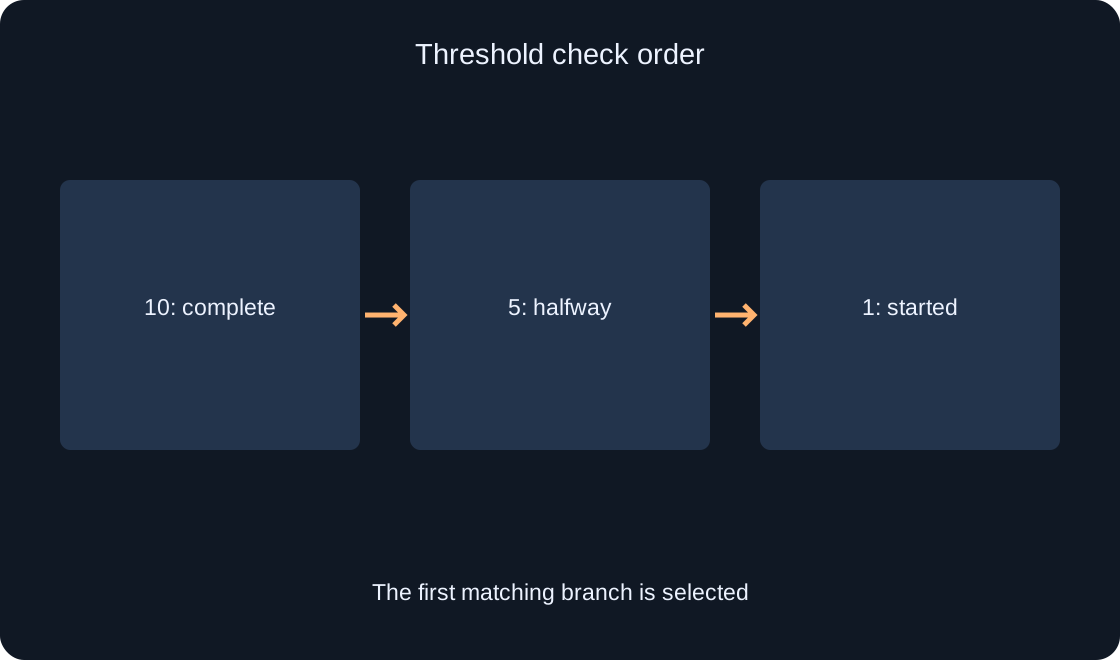
Prefer an explicit branch when the selected result may be false or nil. Brevity is not a correctness test. Retain a test with a true condition and a false selected value: examples containing only true would miss this failure. The existing threshold guide chooses the first matching numeric branch; this separate exercise preserves an actual result that the language evaluates as falsey.
Run an input matrix #
Check the valid cases separately. False with a true default must produce false,true. True with a false default must produce true,true. Nil with a true default must produce true,true. Add nil with a false default as the reverse missing-value case. Record these expectations before execution, so that an accidental enabled result cannot quietly redefine what the function was meant to do.
Then supply zero, an empty string, the text "false" and the number one. Under our contract, each must produce nil,false. Check both results, rather than only whether execution avoided an error. The original assertion suite was actually run in a standalone Luau interpreter. It verifies these data operations; it does not verify audible music, button interactions or saved preferences inside Roblox.
| Input | Result |
|---|---|
| false | false, true |
| true | true, true |
| nil | defaultValue, true |
| 0 / "false" | nil, false |
Integrate the menu as a separate step #
Once the helper behaves correctly, describe where the input originates, when reading finishes and which confirmed state the menu receives. Reopening the panel should preserve a disabled preference. Missing data should use the agreed default in the intended scenario. A repeated render should not reinterpret false as an absence merely because the same panel is being displayed again.
Do not extend a passing pure-data test into a claim about DataStore or the server. A loading failure, a missing record and a rejected type may need different actions. Server checks and reliable error handling remain separate work. Avoid overwriting a record with a fallback just because a panel appeared before reading finished. Specify those timing cases before implementing persistence.
Leave a reproducible handoff #
Record the allowed types, the meaning of nil, both returned values and the rejection cases. Include the source files and the actual check result. This is more useful than saying that music was fixed: another developer can reproduce the data check without access to a gameplay session. Use fictional inputs and keep real player identifiers and credentials out of teaching examples.
If the contract changes later, update the helper, expectations and explanation together. Supporting a separate string-valued mode requires explicit interpretation and new tests, rather than simply removing the type check. Keep the product decision distinct from language behavior. The official reference establishes the operator semantics; your project establishes which preference values are meaningful.
Check the final result before handing it over #
The exercise succeeds when a saved false stays false, nil receives only the agreed default and unsupported types produce a distinct rejection. Check both possible defaults and repeated calls. Confirm that the caller uses valid to decide whether the result can be applied. Look for an and/or shortcut anywhere a valid selected value might be false.
After integration, repeat the checks on the actual Studio panel and separately test saving and reading again. These are future verification steps, not completed gameplay observations. The original example and its official source explain a failure mechanism; they do not mean that an existing game has already been changed. Keep the confirmed helper result separate from the eventual in-game result.
| Check | Action |
|---|---|
| Type | boolean |
| Missing value | Separate nil branch |
| Result | Separate value and valid |
| Integration | Check in Studio |