For players / ROBLOX
Your first Stone Trail run: route, checkpoints and gold
A practical introduction to the temple: controls, learning attempts, falling recovery, gold collection and preparation for a timed run.
What the route offers #
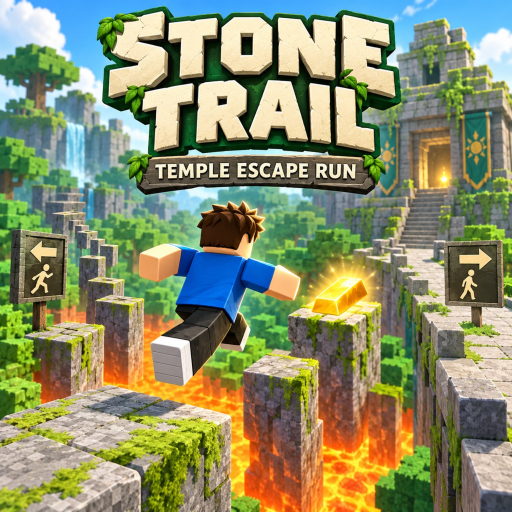
Stone Trail: Temple Escape Run is a game by this site’s author about crossing an ancient temple. Its public description lists 23 stages with branching paths, lava, narrow bridges, timed flames, gates, crumbling platforms, mazes and minecarts. This guide uses that description and proposes a learning plan; it is not a report of a completed playthrough.
Choose one goal for your first attempt: understand the controls and learn to continue from your current section. You do not need a record and every reward immediately. Follow the current game if an in-game prompt differs from this article, and identify the section when reporting a discrepancy.
1. Learn the controls somewhere safe #
The listed PC controls are WASD to move, mouse to look, Space to jump and E to ride. R restarts the run. On a safe platform, practise movement, camera rotation and a normal jump before attempting a narrow bridge. Understand how your camera view affects the route you intend to follow.
Mobile uses a thumbstick, jump button and on-screen prompts. Do not look for a literal E key on a phone; use the displayed action. The description also says music and sound effects can be switched off. Check the available settings in the game if you want a quieter practice session.
2. Explore a section to understand it #
Pause somewhere safe before an unfamiliar obstacle and observe what changes. For a moving or triggered hazard, seeing a cycle before moving can help choose a moment. This is a learning suggestion, not a claim about exact timings; we have not established those intervals here.
At a branch, try one path and remember an identifying feature. If it feels awkward, explore the other on a later attempt. Avoid calling a branch the fastest until you have compared it under similar conditions. Your first objective is reaching the next safe area and understanding why an attempt failed.
3. Falling and restarting are different #
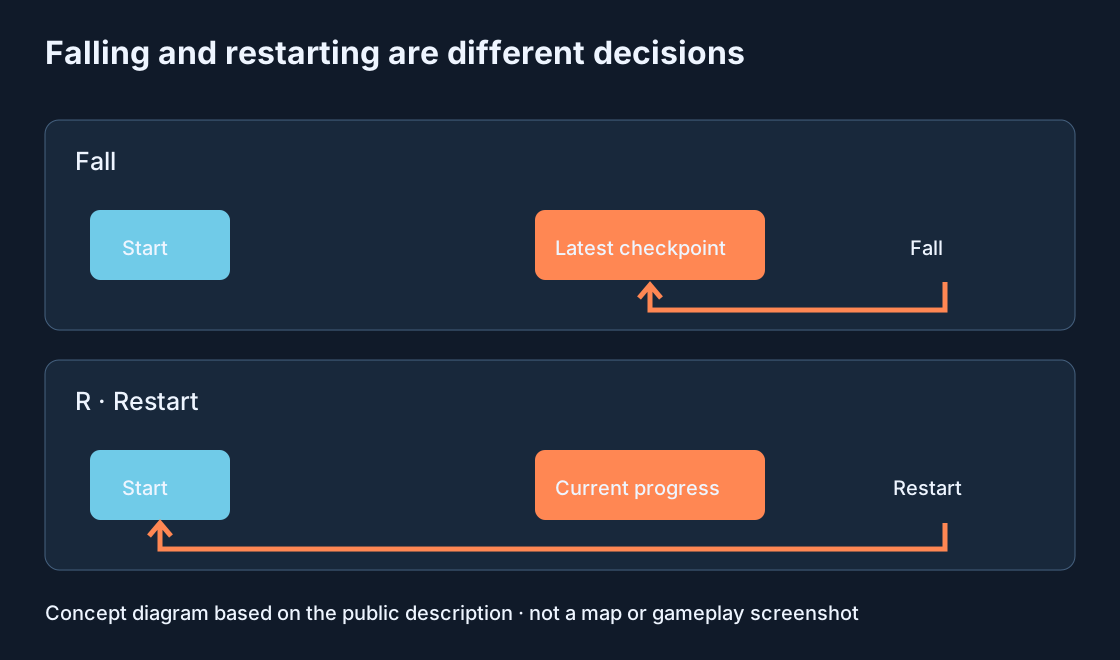
The description says falling returns you to the latest checkpoint. That supports practising a difficult section without repeating everything. R serves a different purpose: restarting the run. Do not use it merely because one attempt failed when you want to keep practising from the reached section.
The diagram below illustrates the difference, not the temple’s map. After returning, inspect the spawn position and the obstacle ahead. If recovery seems unexpected, note the section and preceding actions. One unclear observation is not enough to establish that the entire checkpoint system is broken.
4. Change one technique per attempt #
Choose one thing to vary: jump timing, side of the obstacle or camera position. If landing is difficult to judge, change only the view first and repeat the same route. Changing both route and timing together makes it harder to tell which adjustment helped.
Repeat a successful technique. One success does not yet establish reliable movement. Write a short reminder, such as watch the far edge or wait until the obstacle finishes moving. This article does not provide a verified detailed map, so do not infer stage numbers or precise distances from its diagrams.
5. Give gold collection its own attempt #
The description states that the first five gold unlock a free Firefly Trail and the wallet remains when restarting. Gold also supports listed rewards. This does not establish every coin location, appearance rate or reward condition. Inspect those details in the current game.
For a collection attempt, accept that your time may be slower because you explore branches and look for items. For a timed attempt, follow a practised route instead. Separate goals make the result easier to assess. A slow exploration run can succeed if it teaches a section or collects the gold you wanted.
6. Prepare a timed run #
First confirm that familiar sections can be repeated without accidental route changes. Then choose a clear line of movement and start a separate attempt to improve your time. Compare similar runs: the same route and purpose are more informative than attempts repeatedly diverted by collection.
The description mentions a personal best and competition for the fastest time on the server. These are different achievements. Improving your own time does not automatically mean leading the current participants. This guide invents no records or difficulty ranking; use the results actually displayed by the game.
Bonus route and beginner questions #
The public description lists a five-stage Sky Temple for Roblox Plus members, with a separate leaderboard and cyan trail. Explore the available main course first. A bonus does not itself make a subscription necessary for getting acquainted. Review current Roblox and in-game terms before any purchase.
For a failed jump, practise controls in a safe place. If direction is unclear, turn the camera and identify the next accessible area. For a minecart interaction, approach it and read the current prompt. Check falling recovery separately from R. A useful issue report identifies device, section, action and expected result.