Studio / ROBLOX
The first reward nobody noticed: a fictional Roblox prototype story
A fictional lesson about a delivered battery and a blue wrench: show completion, locate the item, separate granting from saving, and prepare an unfilled test plan.
 Open full-size image ↗
The workshop that never said “done” #
This is a fictional teaching story. The wharf, a prototype called Lantern Workshop, developer Mira and player Lina are invented to explore an interface problem. It is not a real review, biography or report of completed tests. We have not modified the site author’s five games for this scene. Every change below is a proposal for this small imaginary prototype.
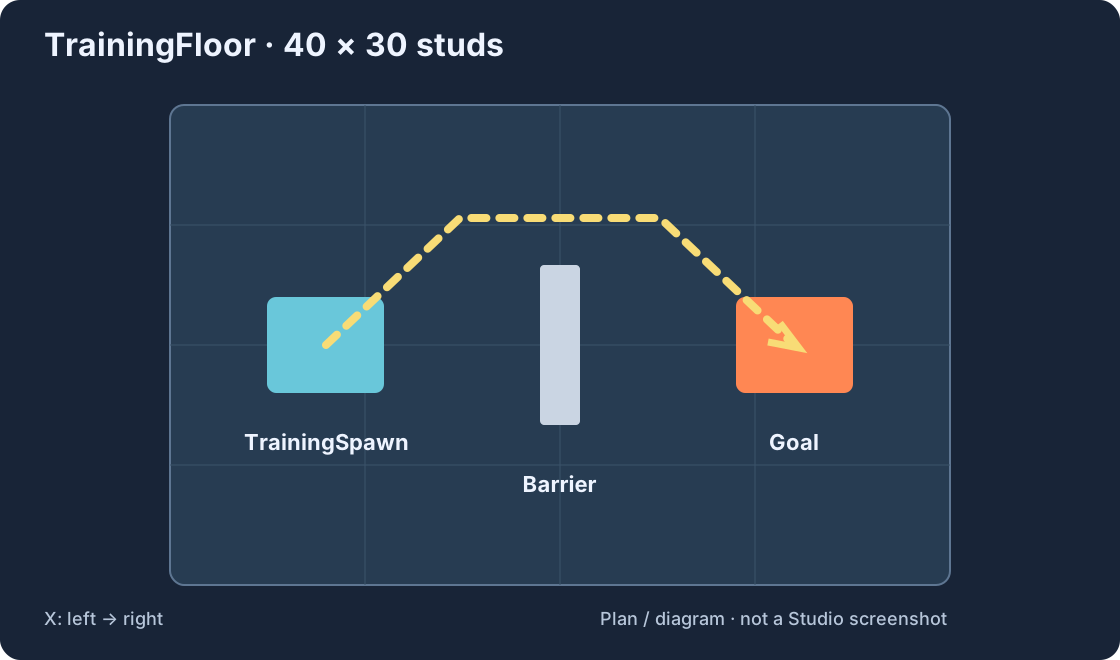
A boat rocks beside the wharf. The workshop’s desk lamp has gone dark, and the caretaker asks for a battery. The first assignment promises a blue wrench for the next repair. Take a battery, hand it over, receive a wrench: a small task. Lina already understands the route. The problem starts where that route ends: how can she tell her work was accepted?
1. The battery vanished, but the question stayed #
Lina puts the battery on the table. The lamp lights up, the object leaves her hand, and the caretaker turns towards the boat. “Bring a battery” still hangs in the corner. A coin counter does not change, because the reward is not coins. Lina looks at the lamp and then her empty hand. “Did I get the wrench, or should I press again?”
Mira knows the intended wrench belongs among the tools. Lina does not know that connection. A vanished battery could mean delivery, loss or a bug. Another route arrow would solve the wrong problem: the player arrived. What is missing is an answer to the completed action. Mira writes a question: what should the player be able to name after handing it over?
2. A celebration did not answer the question #
Mira’s first suggestion is sparks above the table. In the next imagined scene, the lamp has a beautiful glow. It feels pleasant but only says that something happened. What was awarded? Where is it? Should the handover be repeated? Those questions remain. A louder sound would not name the item either, especially with sound switched off.
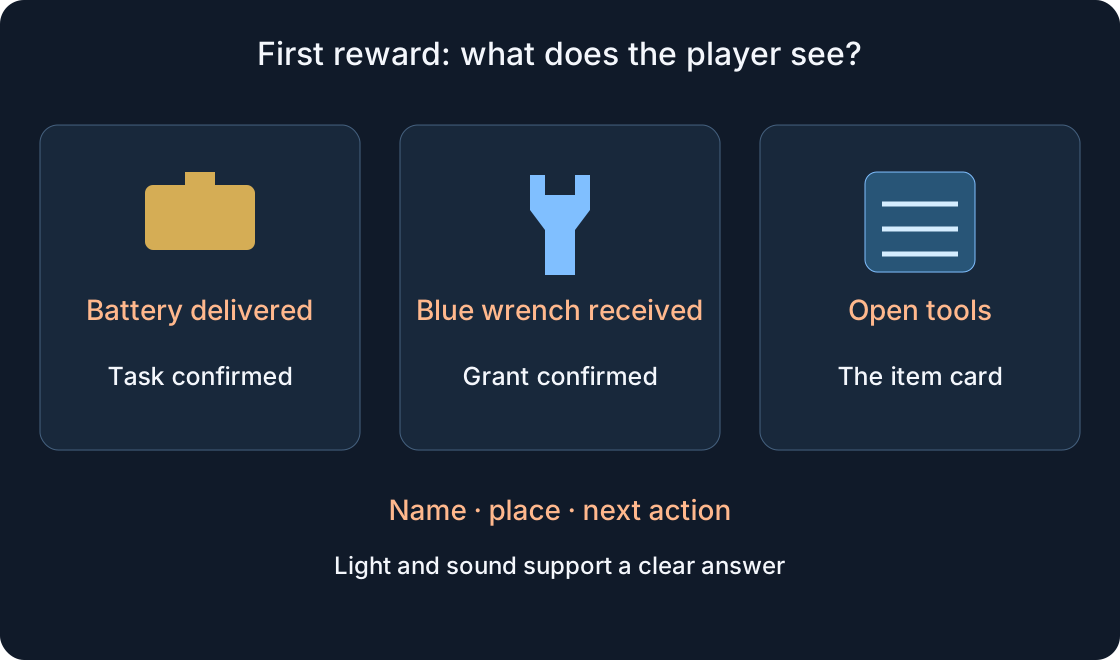
Mira keeps a brief light accent as decoration but stops treating it as the entire confirmation system. On paper she draws three empty spaces: completed assignment, received item, available next action. If one cannot be filled in plain words, animation cannot repair the meaning. The prototype now has a useful constraint: decide the answer first, then choose an effect that supports it.
3. The reward contract fits on one line #
Before decorating, Mira writes: “The first battery assignment grants one blue wrench to tools.” The character keeps it; another attempt to finish that same first assignment does not add a second. This is the imaginary prototype’s rule, not a universal rule for Roblox rewards. A repeatable assignment would require different conditions.
Now the relevant indicator is clear: the wrench entry in inventory and the first assignment’s state, not a general money counter. Mira also notes what completed means, when the next repair becomes available, and what must survive a new visit. One line connects the interface with the intended game. It does not prove implementation correctness, but it makes a discrepancy visible: two wrenches for one first handover contradict the rule.
4. The message follows a confirmed action #
Mira proposes “Battery delivered. Blue wrench received” near the current task area. It should appear after completion is checked and the reward exists in game state, not merely because a button was pressed. While waiting, a different response is needed: “Checking delivery.” The player can then distinguish a request from its result.
An “Open tools” action appears underneath. A short sound and light accent can accompany the message without replacing it. The journal changes to completed only with the corresponding state. The text names an item and action instead of an unexplained “Success!” Mira must also check its position: it should not cover phone controls or disappear before the player has a chance to look at it.
5. The reward remains findable after the message closes #
Imaginary Lina opens tools. In the proposed version, the card says “Blue wrench” and uses the same icon as the message. A brief highlight draws attention to that specific card. Its purpose is written beside it: “For the next repair.” An unfamiliar picture no longer requires guessing which object was just added.
Inventory remains a place to verify the result after the notification closes. Mira does not highlight the shop, collection, settings and every future assignment at once. The current connection is one task and one tool. If the player returns to the entry later, the names should stay consistent. This is the prototype’s own inventory, not a purchase of an avatar item or an automatic grant of a platform-wide Roblox object.
6. Task state and save state are different #
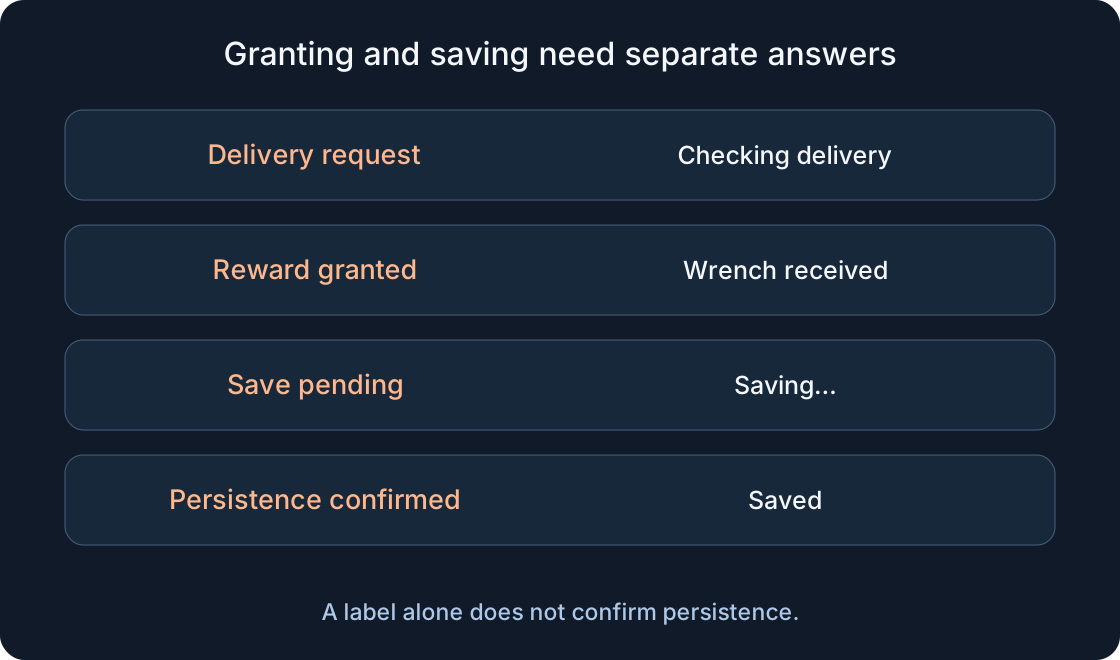
Mira lays out cards: assignment active; handover being checked; reward received; result saved for the next visit. The final card does not automatically follow from an item appearing on screen. The interface could say “Wrench received. Saving…” when granting is confirmed but persistence is still pending. “Saved” needs a basis of its own.
Developers need precise internal states; players need understandable answers. A waiting message should not look like both failure and completion. If only the handover request is known, do not show the wrench as already owned. If the grant is known but persistence is unconfirmed, do not present the current session as a promise about the next. The diagram helps discuss these differences before writing code.
 Open full-size image ↗
7. A second press checks the rule, not a new reward #
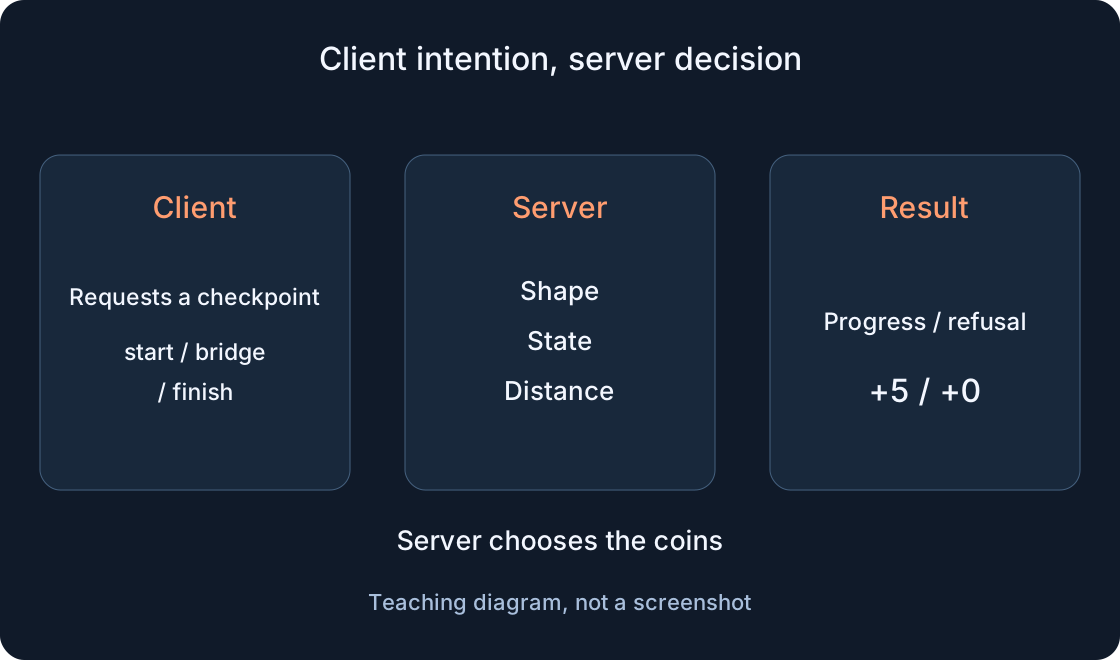
Lina might miss the response and press again. Mira proposes changing the button temporarily to “Checking” so the screen does not invite endless presses. Changing a button alone does not protect granting: repeated requests and reward eligibility belong to server logic, not just presentation.
For the first assignment, the system should recognise an already processed completion and return its current state without granting again. The technical plan includes repeated requests, delayed responses and an interruption between modifying the reward and persisting data. This article supplies neither a finished transaction nor an exactly-once guarantee. The author must design a consistent rule for item and completion, then check it in a separate test version. A pleasing screen cannot replace those checks.
8. A new visit asks a different question #
In the story, Mira almost declares victory after seeing the wrench card. Then she notices another notebook page: “What will Lina see after leaving and returning?” Owning the wrench now and restoring it later are separate checks. The item, first assignment record and permission for the next repair must agree; one attractive label is not enough.
Pending or uncertain persistence needs an honest status such as “Checking save,” rather than unconditional “Everything saved.” A lost connection is not a reason to guess that the reward certainly vanished and immediately grant another. Recovery belongs in its own test scenario. Save tests use a separate version: Studio access to production data can affect real progress, so this story does not propose enabling it on a live game.
9. Tables turn doubt into checkable proposals #
Mira no longer writes only “make the reward clearer.” She ties each problem to a visible change and a question. An old objective remains? Propose a consistent completed state. The grant is unclear? Name the item and its inventory. It cannot be found after closing? Keep an entry rather than repeating a flash forever.
The first table contains proposals, not test results. The second is an unfilled plan: device, version and observation still need recording. An empty result is better than an invented checkmark. Do not ask a participant to repeat an answer you already supplied. Ask what happened and where they would verify the item, then record their actions. Correct data alone does not mean the message was noticed.
| Before | Proposal | How to check |
|---|---|---|
| Battery disappears without explanation | Name delivery and wrench after confirmation | Can the player describe what happened? |
| Only coins are visible | Open the relevant tool inventory | Can the player find the wrench card? |
| The journal keeps the old objective | Align completion and the next repair | Do journal and reward state agree? |
| Another press looks like a new request | Clear waiting; server handling for processed completion | Does retrying change the wrench count? |
| An on-screen item is assumed saved | Separate granting from persistence status | Do item and task recover after rejoining? |
10. Apply the method to your first reward #
Choose one assignment in your game. Write what the player hands over or completes, what they receive and where it can be inspected later. Name the relevant indicator only: a tool, collection entry, experience or another intended result. Do not make someone watch coins when the reward belongs to another system.
Define expected states before acting, during checks, after granting and after confirmed persistence if provided. Prepare separate scenarios for retries, rejoining, muted sound and a small screen. Change one source of confusion at a time and retain the comparison version. Creator Hub describes feedback as a response to an action and recommends prioritising information needed now. The wrench and the entire scene are our own examples, not copied game cases.
| Scenario | What to observe | Device / version / result |
|---|---|---|
| One first handover | Message, one wrench, completion, next action | — |
| Repeated request and delayed response | No second grant; consistent states | — |
| Message closed and sound muted | Item findable and result understood without sound | — |
| Small screen | Readable text and accessible controls | — |
| Rejoining after confirmed persistence | Wrench, assignment state and repair access | — |
| Interrupted or uncertain persistence | Honest status and recovery without guessing a new grant | — |
11. Lina now knows what is in her bag #
In the imaginary prototype’s final scene, the lamp lights without a long fireworks display. The message names the delivered battery and received wrench. Lina opens tools, sees the matching label and understands the next repair offer. She no longer attempts to hand over a vanished battery simply to discover whether anything happened.
This ends the story, not a measured retention improvement. Mira still has her test plan, particularly for saves and repeated requests. Yet the design idea is complete: a first reward needs an understandable place in the action’s story as well as an existence in data. Take the rule, tables and questions, substitute your assignment for the battery, and check your own scene without borrowing code or inventing player reviews.
Original sources
Roblox Creator Hub — Onboarding techniquesUI and UX design
Onboarding
Data stores
Securing the client-server boundary